Collective Visions: How Artist Groups Shaped the Story of Modern Indian Art
From the Bengal School to Raqs Media Collective, the history of Indian art is also the history of artists who chose to work, think, and dream together.
Modern Indian art is often narrated through the achievements of individual geniuses—Raja Ravi Varma, Abanindranath Tagore, M.F. Husain, S.H. Raza, Tyeb Mehta, or Ramkinkar Baij. Yet behind many of these celebrated names lies another, equally compelling story: the story of collectives, societies, artist circles, and informal communities that transformed the cultural landscape of India.
These groups were not merely exhibition platforms. They were laboratories of ideas where artists debated identity, questioned academic conventions, challenged colonial aesthetics, experimented with new media, and imagined alternative futures. Some lasted only a few years; others continue to influence generations of artists. Together, they reveal that the evolution of Indian modernism was never the work of isolated individuals but of communities in conversation.
The Bengal School: Art as National Awakening (c. 1905–1925)
The first major artistic movement in twentieth-century India emerged not as a stylistic exercise but as a political and cultural response to colonial rule.
Centred around Abanindranath Tagore, the Bengal School sought to reject the dominance of European academic realism taught in British art schools and instead revive indigenous traditions inspired by Mughal miniatures, Rajput painting, Ajanta murals, Japanese wash techniques, and Indian literary themes. 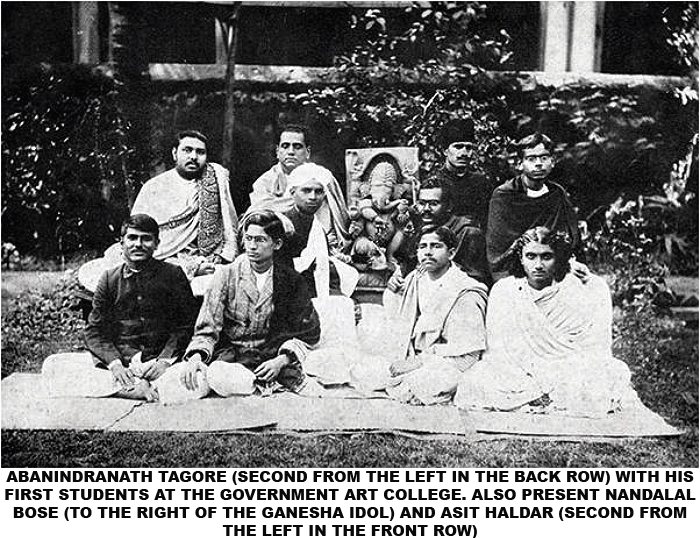
Supported by E.B. Havell, Principal of the Government School of Art in Calcutta, the movement included artists such as Gaganendranath Tagore, Nandalal Bose, Asit Kumar Haldar, Kshitindranath Majumdar, Surendranath Ganguly, and later influenced artists including Benode Behari Mukherjee and Jamini Roy, although the latter eventually forged his own independent path.
The Bengal School became the visual counterpart of the Swadeshi movement, arguing that cultural independence was inseparable from political independence.
Bichitra Club: The Tagores’ Experimental Laboratory
Established in 1915 at the Tagore family’s Jorasanko residence in Calcutta, the Bichitra Club remains one of the earliest examples of interdisciplinary collaboration in Indian culture.
Here, painters, writers, musicians, actors, and intellectuals met regularly to exchange ideas. Rabindranath Tagore envisioned art as an integrated practice rather than a collection of separate disciplines, making Bichitra a precursor to later experimental communities such as Santiniketan.
Although short-lived, its influence extended well beyond its years, fostering a climate where modern Indian creativity could flourish.
Santiniketan and Kala Bhavana: A Living Community Rather Than a Group
Unlike formal collectives, Kala Bhavana at Santiniketan, founded by Rabindranath Tagore and later led by Nandalal Bose, functioned as a living artistic ecosystem.
Artists such as Benode Behari Mukherjee, Ramkinkar Baij, K.G. Subramanyan, and Somnath Hore transformed art education by integrating nature, craft traditions, mural painting, sculpture, printmaking, and rural life into their practice.
Rather than copying European models, Santiniketan proposed a contextual modernism rooted in Asian philosophy, local traditions, and international dialogue.
Its influence continues to shape Indian art education today.
The Calcutta Group: Modernism in a Time of Crisis (1943) 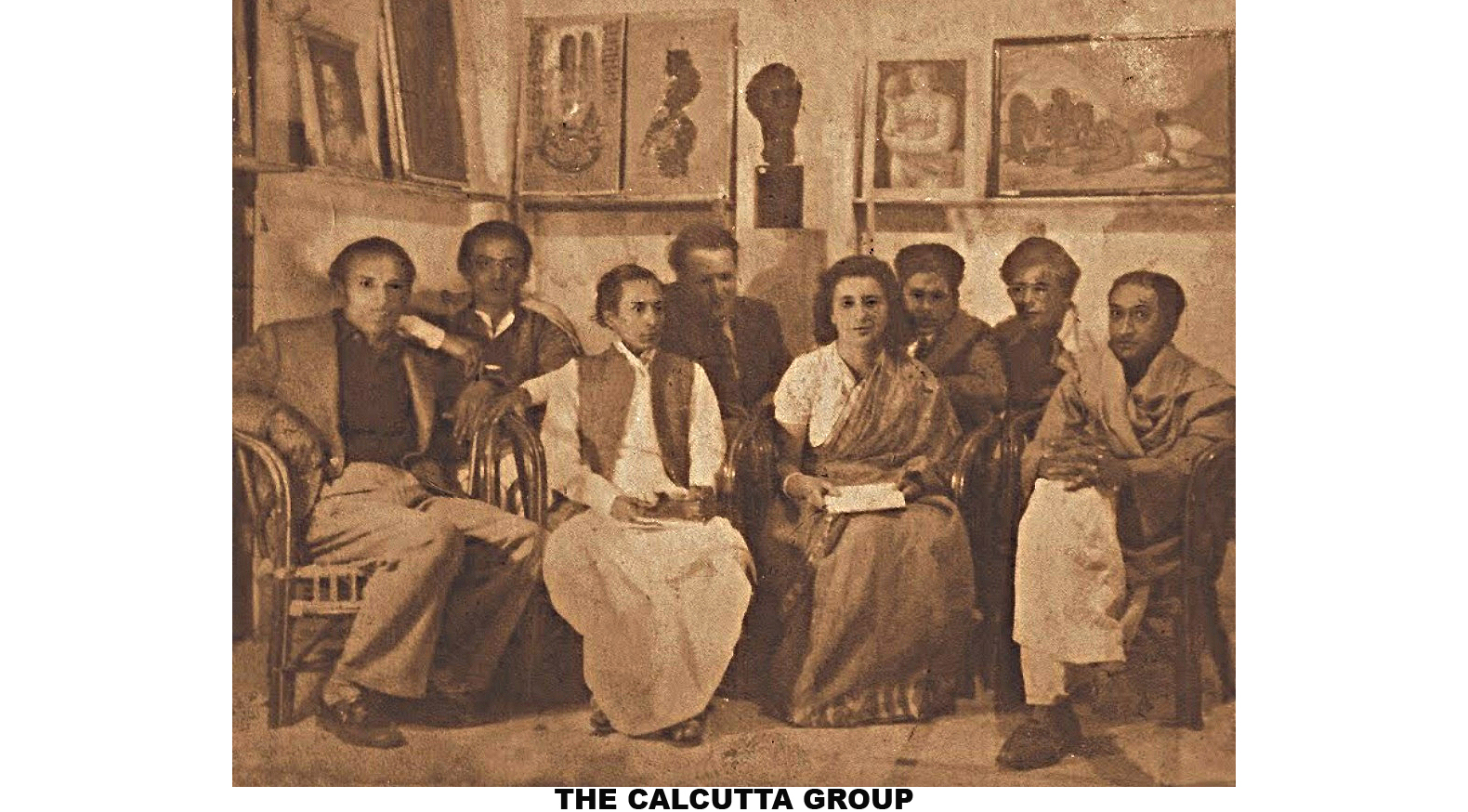
The devastation of the Bengal Famine and the Second World War fundamentally altered the priorities of a younger generation of artists.
Founded in 1943, the Calcutta Group became India’s first organised modernist collective.
Rejecting both colonial academicism and the romantic revivalism of the Bengal School, artists including Paritosh Sen, Nirode Mazumdar, Gopal Ghose, Prodosh Das Gupta, Rathin Maitra, Pran Krishna Pal, Subho Tagore, Kamala Das Gupta, and Sunil Madhav Sen embraced expressionism, Cubism, and social realism.
Their works confronted poverty, urbanisation, political upheaval, and existential anxiety with unprecedented directness, laying the foundations for post-independence modernism.
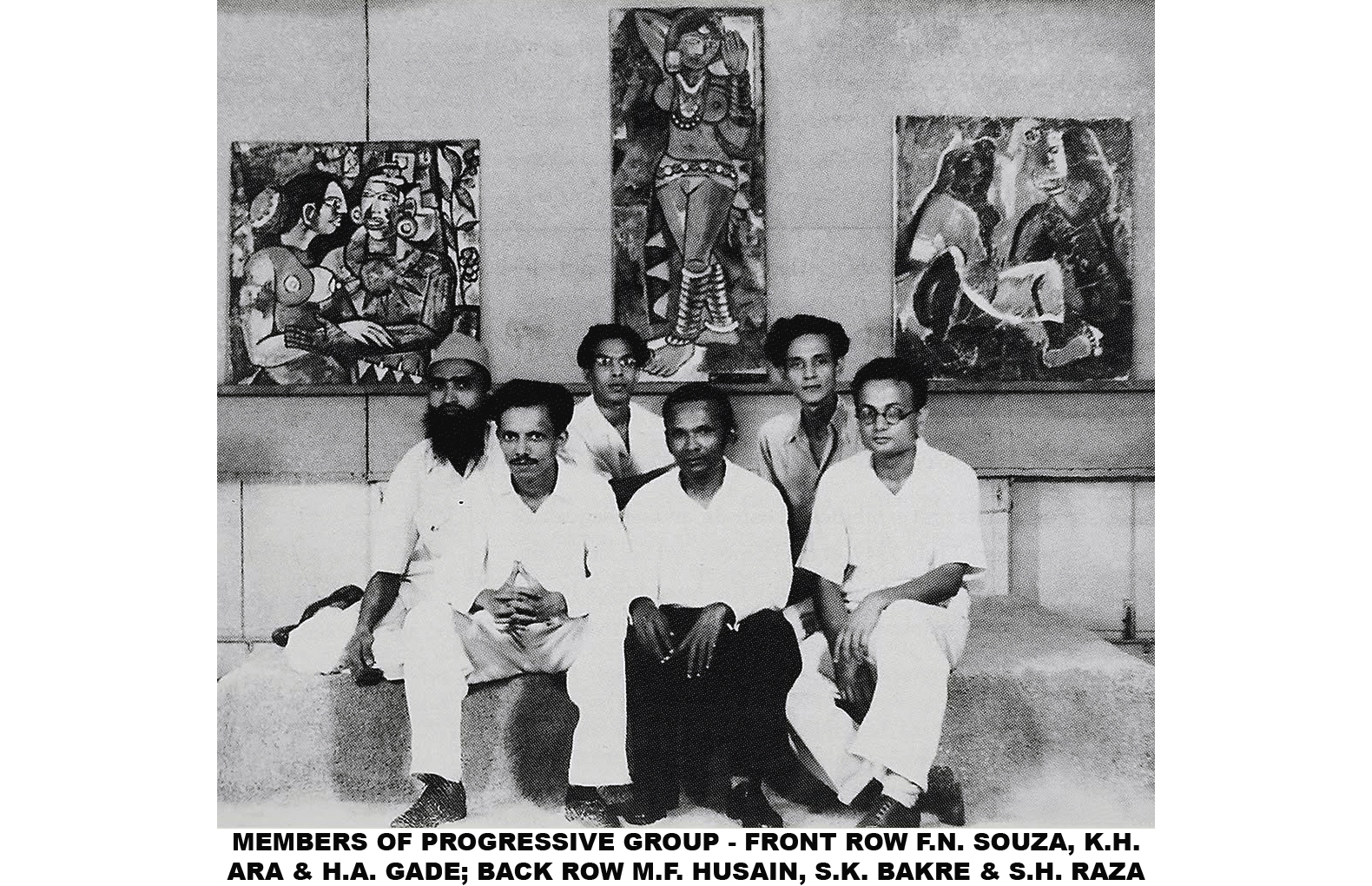
Progressive Artists’ Group: Reinventing Indian Modernism (1947)
Few collectives have had an impact comparable to Bombay’s Progressive Artists’ Group (PAG).
Founded in the year of Indian independence by F.N. Souza, S.H. Raza, M.F. Husain, K.H. Ara, H.A. Gade, and sculptor S.K. Bakre, the group rejected both Victorian academicism and nationalist revivalism in favour of a cosmopolitan modernism informed by Picasso, Cézanne, Expressionism, and post-war Europe.
Although the group formally dissolved within a few years, its influence expanded through associated figures such as Tyeb Mehta, Akbar Padamsee, Ram Kumar, Krishen Khanna, and V.S. Gaitonde.
Today, PAG remains the most internationally recognised chapter in Indian modern art.
Delhi Silpi Chakra: Democratising Artistic Practice 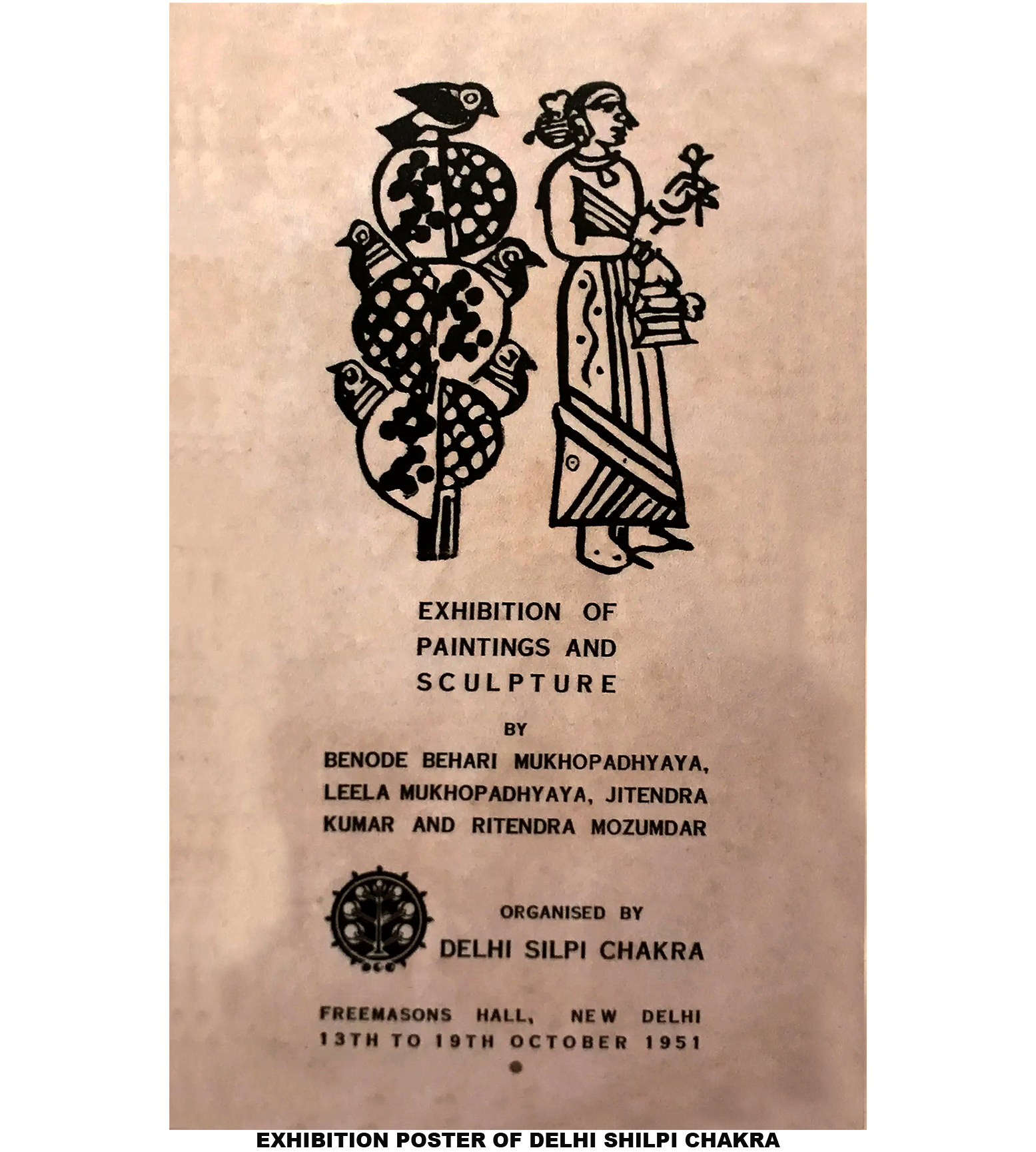
Founded in 1949, the Delhi Silpi Chakra sought to create direct engagement between artists and the public while reducing dependence on official institutions.
Led by pioneers including D.P. Roy Chowdhury and B.C. Sanyal, it organised exhibitions, discussions, and educational initiatives that helped establish Delhi as an important artistic centre in post-independence India.
Its emphasis on dialogue rather than hierarchy distinguished it from many earlier institutions.
Group 1890: A Brief but Radical Experiment 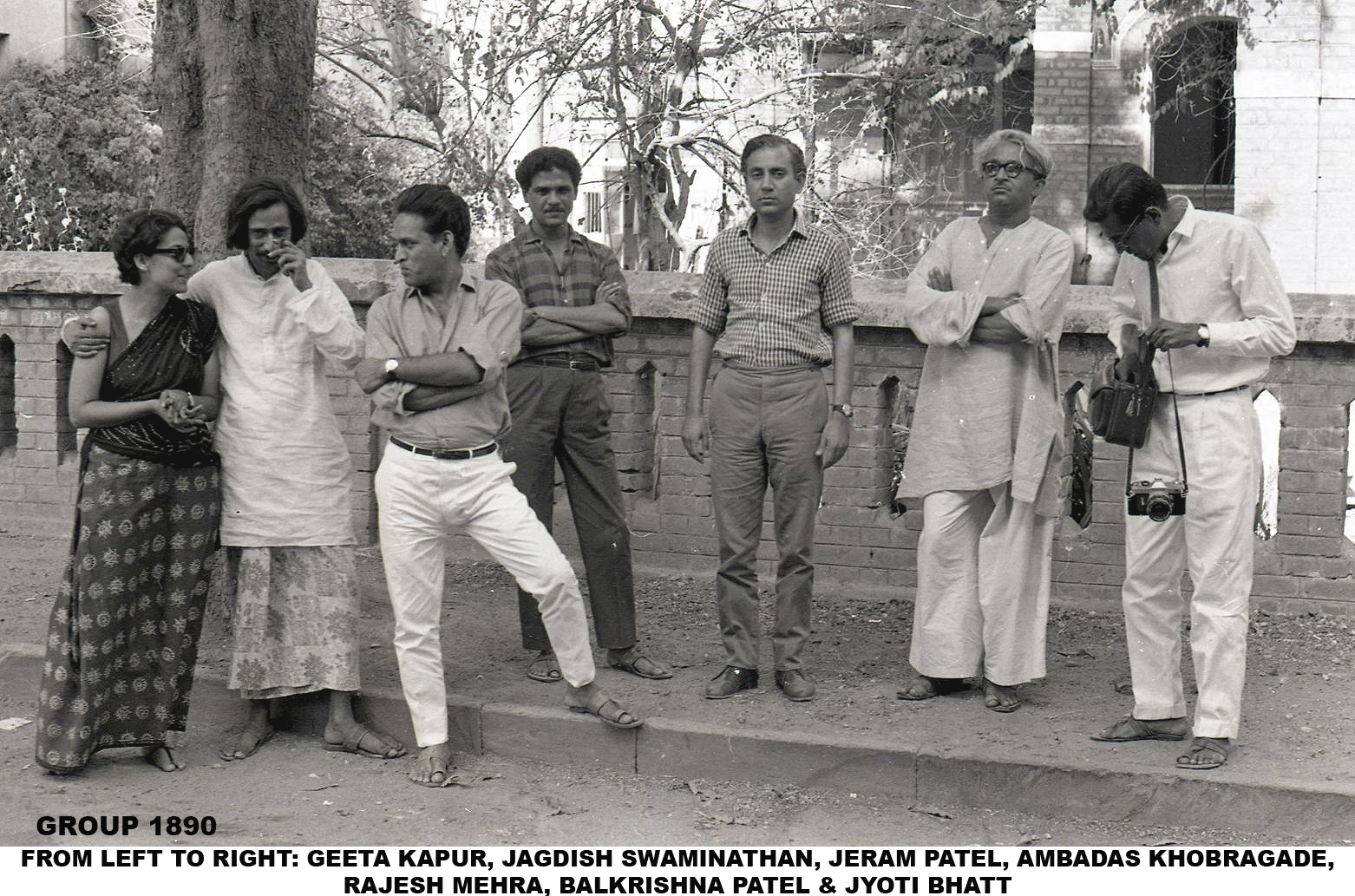
If the Progressives represented one vision of Indian modernism, Group 1890 proposed another.
Formed in 1963 under the intellectual leadership of J. Swaminathan, its members—including Himmat Shah, Jeram Patel, Jyoti Bhatt, Gulammohammed Sheikh, Raghav Kaneria, Ambadas, and others—rejected both academic realism and established modernist formulas.
Their manifesto called for a deeper engagement with instinct, materiality, and individual imagination.
Though the group exhibited only once before dissolving, its intellectual influence proved far greater than its brief lifespan suggests.
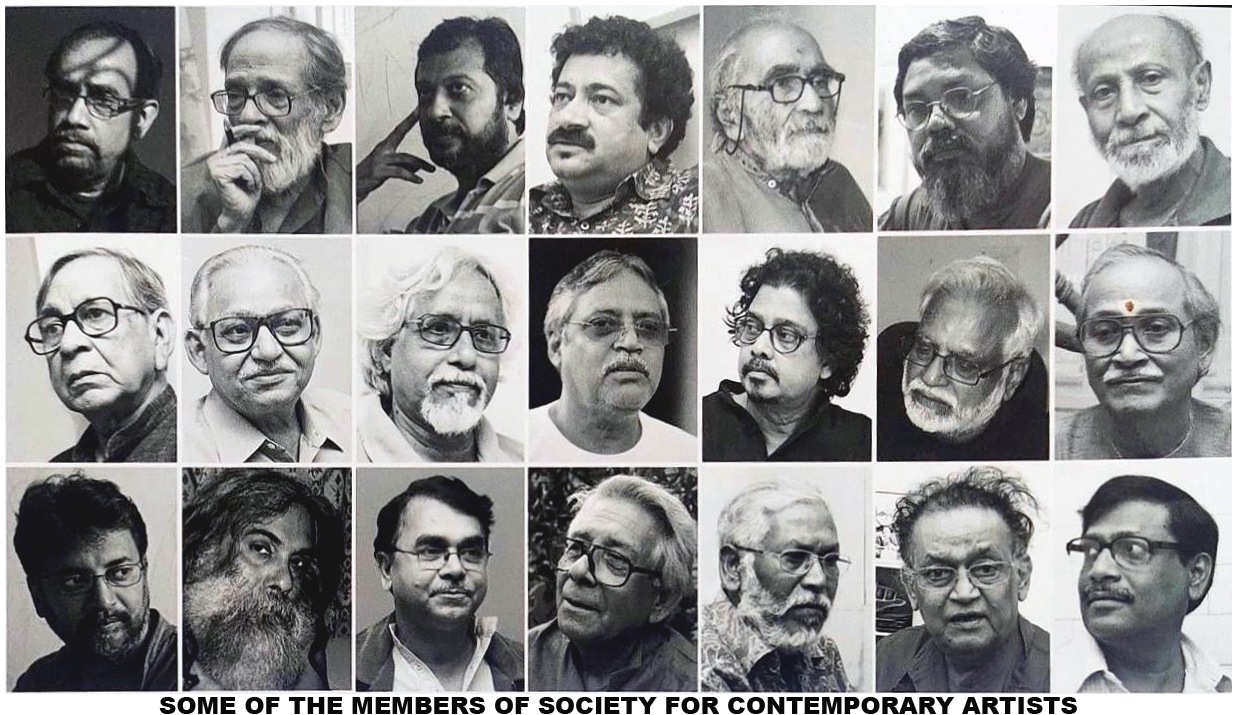 Society of Contemporary Artists: Bengal’s Continuing Dialogue
Established in 1960 in Kolkata, the Society of Contemporary Artists (SCA) became one of India’s longest-running artist collectives.
Founding members included Sanat Kar, Nikhil Biswas, Shyamal Dutta Ray, Somnath Hore, Sunil Das, Bijan Choudhury, and Arun Bose. In later decades, artists such as Ganesh Pyne, Bikash Bhattacharjee, Ganesh Haloi, and many others became associated with its exhibitions.
The Society provided an independent platform for experimentation outside state institutions and commercial galleries, playing a vital role in sustaining Bengal’s artistic vitality.
Cholamandal Artists’ Village: Building an Artistic Community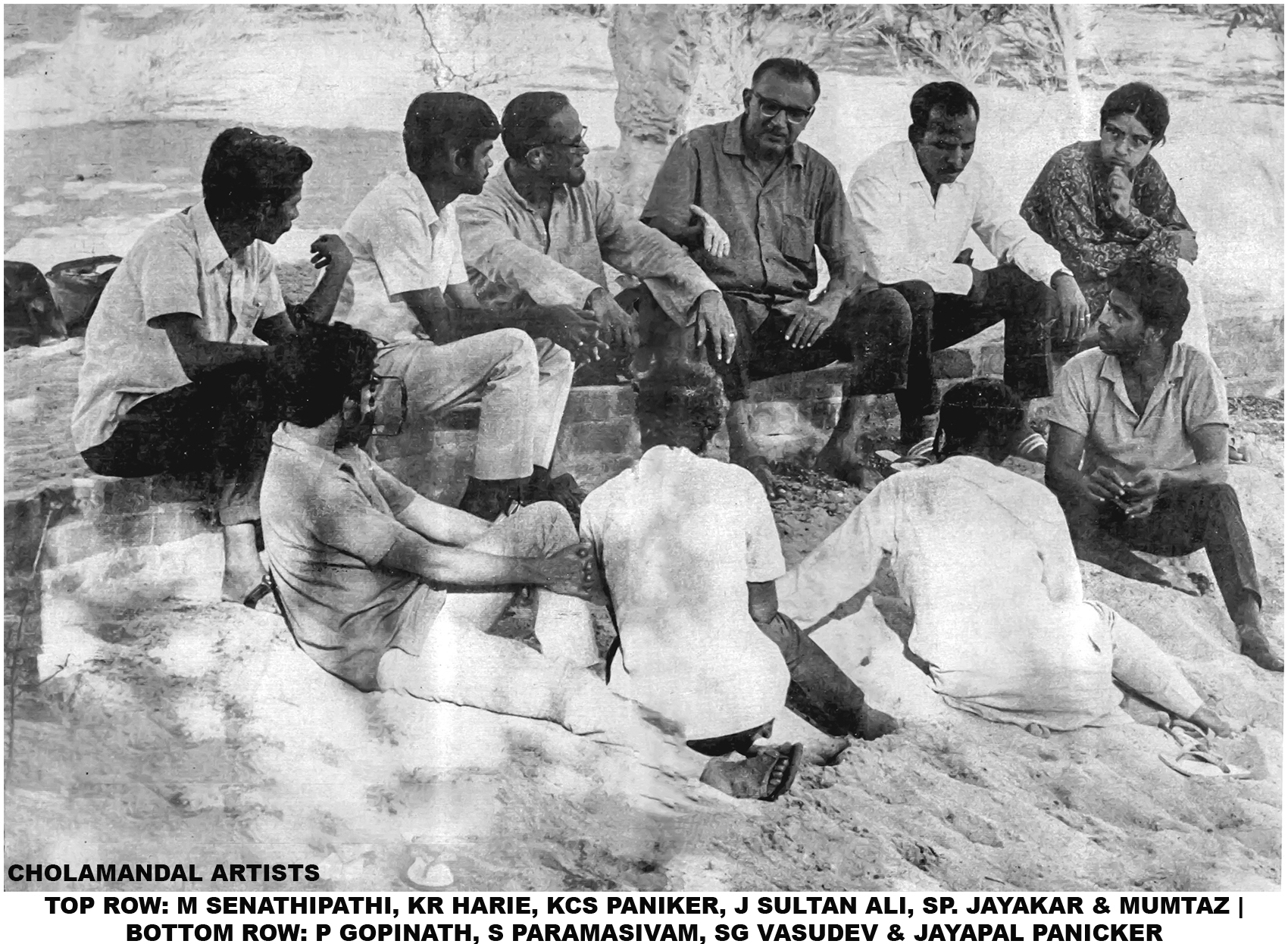
In 1966, under the leadership of K.C.S. Paniker, artists near Chennai established what would become one of India’s most remarkable experiments in collective living.
The Cholamandal Artists’ Village combined cooperative economics with artistic independence. Residents produced paintings, sculptures, batik, ceramics, and crafts, generating income while pursuing ambitious creative practices.
Associated with the broader Madras Movement, Cholamandal nurtured artists such as S. Dhanapal, L. Munuswamy, P. Gopinath, and many others who developed a distinct South Indian modernism rooted in local traditions while engaging global aesthetics.
More than half a century later, it remains an active artist community.
The Baroda School: A Pedagogical Revolution
Although never a formal collective, the Faculty of Fine Arts at Maharaja Sayajirao University, Baroda, created one of India’s most influential intellectual communities.
Teachers and artists including K.G. Subramanyan, Gulammohammed Sheikh, Bhupen Khakhar, Jyoti Bhatt, Ratan Parimoo, and Nasreen Mohamedi fostered an environment where conceptual thinking, narrative painting, popular culture, miniature traditions, and contemporary theory coexisted.
Its impact on Indian contemporary art remains profound.
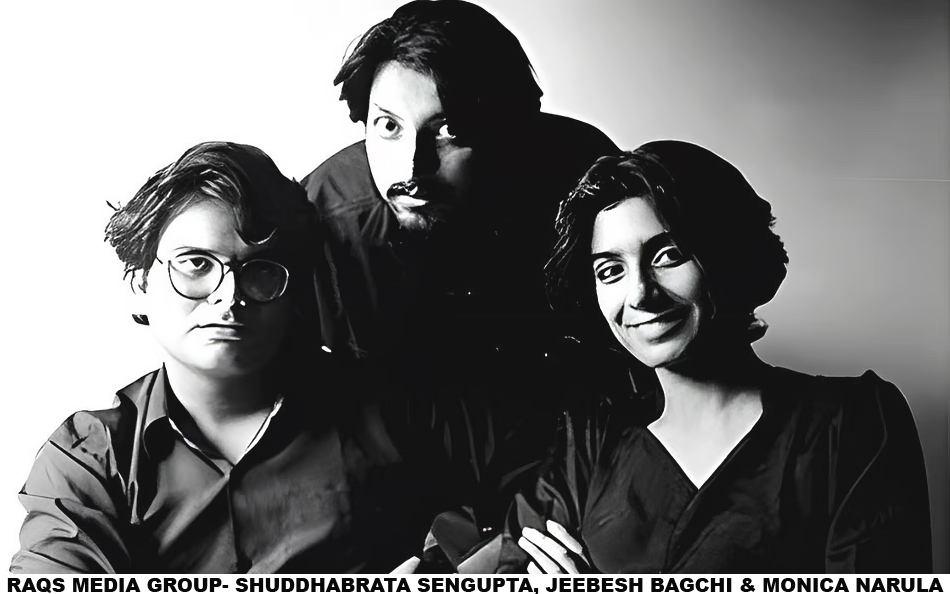
Raqs Media Collective: Art in the Age of Information
Founded in 1992 by Jeebesh Bagchi, Monica Narula, and Shuddhabrata Sengupta, the Raqs Media Collective expanded the very definition of artistic practice.
Working across installation, film, digital media, philosophy, archives, and public interventions, Raqs has represented India at major international biennales while challenging conventional distinctions between art, research, technology, and activism.
Their practice reflects the increasingly interdisciplinary nature of twenty-first-century art.
Beyond India: Diaspora Communities
Indian artistic collaboration has also flourished overseas.
Groups such as the Indian Painters Collective in Britain, involving artists like Balraj Khanna and Lancelot Ribeiro, helped introduce Indian modernism to international audiences while negotiating questions of migration, identity, and postcolonial experience.
Similarly, numerous informal networks in Paris, London, New York, and Dubai have contributed significantly to India’s global artistic presence.
Why Artist Collectives Matter
Artist groups rarely survive unchanged.
Personal ambitions diverge. Political contexts shift. Aesthetic disagreements emerge. Financial realities intervene.
Yet their importance lies precisely in these conversations.
Collectives create intellectual ecosystems where ideas evolve more rapidly than individuals working alone. They encourage experimentation, provide mutual support, establish alternative institutions, and often become incubators for entirely new artistic languages.
Many of India’s greatest artistic breakthroughs—from the Bengal School to the Progressives, from Santiniketan to Cholamandal—were born not in isolation but through dialogue.
The Legacy Today
As India enters a new era of digital platforms, AI-assisted creativity, artist residencies, and global collaboration, the role of collectives is once again evolving.
Online communities, interdisciplinary labs, research initiatives, and cooperative studios may become the contemporary equivalents of Bichitra, the Calcutta Group, or Group 1890.
Their forms may change, but the principle remains constant.
Art grows strongest when artists challenge one another, learn from one another, and imagine together.
The history of modern Indian art is therefore not simply a succession of masterpieces.
It is also the history of conversations.
And some of the most important conversations in Indian art began when artists decided that creating together could be as revolutionary as creating alone.
Endnotes
- Tapati Guha-Thakurta, The Making of a New Indian Art: Artists, Aesthetics and Nationalism in Bengal, c.1850–1920 (Cambridge University Press, 1992).
- Partha Mitter, Art and Nationalism in Colonial India, 1850–1922 (Cambridge University Press, 1994).
- R. Siva Kumar (ed.), Santiniketan: The Making of a Contextual Modernism (National Gallery of Modern Art, 1997).
- Yashodhara Dalmia, The Making of Modern Indian Art: The Progressives (Oxford University Press).
- Exhibition catalogues and archival publications of the Indian Society of Oriental Art, Society of Contemporary Artists, Cholamandal Artists’ Village, Faculty of Fine Arts (MSU Baroda), and Raqs Media Collective.
Selected Bibliography
- Guha-Thakurta, Tapati. The Making of a New Indian Art. Cambridge University Press.
- Mitter, Partha. Art and Nationalism in Colonial India. Cambridge University Press.
- Siva Kumar, R. (ed.). Santiniketan: The Making of a Contextual Modernism. NGMA.
- Dalmia, Yashodhara. The Making of Modern Indian Art: The Progressives. Oxford University Press.
- Various institutional archives of the Indian Society of Oriental Art, Cholamandal Artists’ Village, MSU Baroda, and Society of Contemporary Artists.
Editorial Note
This essay forms part of Talk Art’s continuing series on the institutions, movements, and communities that shaped Indian art. Future instalments will examine artist residencies, cooperative studios, printmaking collectives, women-led initiatives, and cross-cultural collaborations that continue to redefine the visual culture of South Asia.
- Research & Compiled by Aakriti Art Gallery team
Comments
Join the Discussion
Please login to post comments.
Login